
Maps
Of bread and my fall travels

Dear Readers,
I’ve written you a million letters I’ve never sent. About soft serve swirls of vanilla and chocolate, and the essential trip to the beach with my mom and sisters. About cooking with the Holy Cross Congregational Church for their festival. (Offer your hands to any community cooking opp you can! So nourishing!)
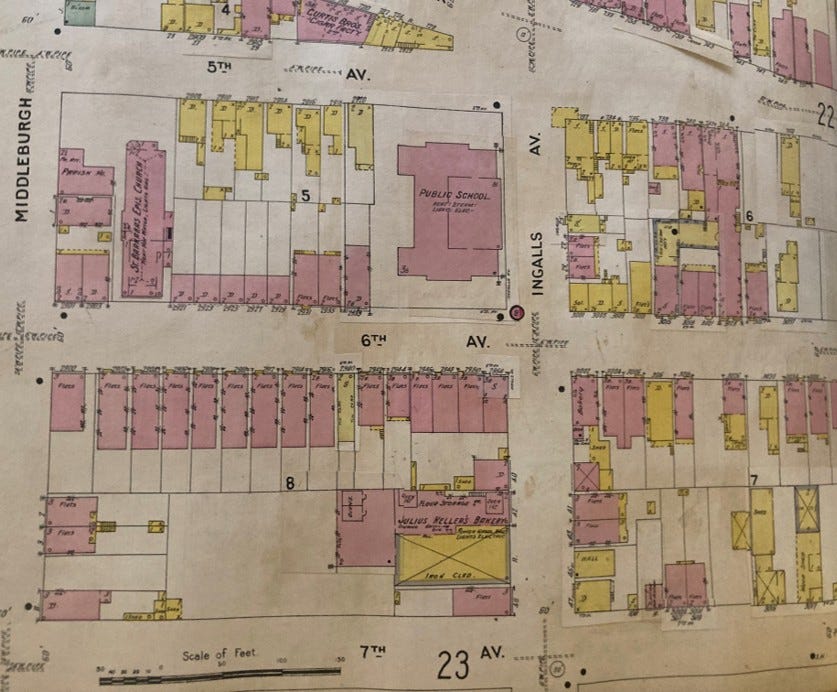
At last, I will write you the maps I’ve been looking at — Sanborn Fire Insurance mostly. I was swimming in them this summer, at the Hart Cluett Museum as I traced the bakery landscape in 1911, when our first factory bakery ‘discovered’ us. The Philadelphia Freihofer baking family came through Troy en route to Montreal, to look at an oven, and saw this City of Women.
One in three women in Troy worked in the collar and cuff industry, sewing or starching detachable shirt collars and cuffs. When the out-of-town bakers saw this sea of women working out of the home — sometimes in the home, too, doing piecework — they saw an ample market. They scrapped plans for an expansion elsewhere in Pennsylvania and came here.
I’d always assumed that Freihofer’s was the first big bakery in my city, but in the maps, I found a thriving realm of commercial baking, ranging from corner shops to plants that covered half blocks and whole blocks. Wagons and sheds showed me that these bakeries delivered, too — something that in local lore is only linked to Freihofer’s.
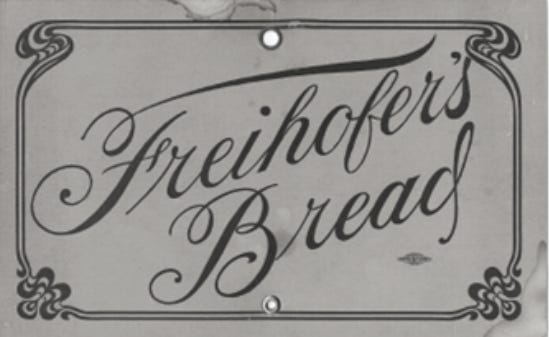
My fondness for Freihofer’s is not diminished, but I see that such feelings can hide the existence of other landmarks. John English Baking Company has a trading card in a collection at the Metropolitan Museum, as part of their Magic Flying Trip giveaway series! The bakery gave away a car in 1927, teaming up with a local dealer and inviting kids to describe bread to be included in the drawing.
Keller’s Bakery was big too. Julius Keller went to Kansas City, MO in 1911 for the conference of the National Association of Master Bakers, joining more than 300 bakery owners from around the country to talk about their work. He came home with copies of “The Story of the Staff of Life,” a pamphlet that helped describe the work of sanitary bakeries and shift bread sentiments away from homemade.1
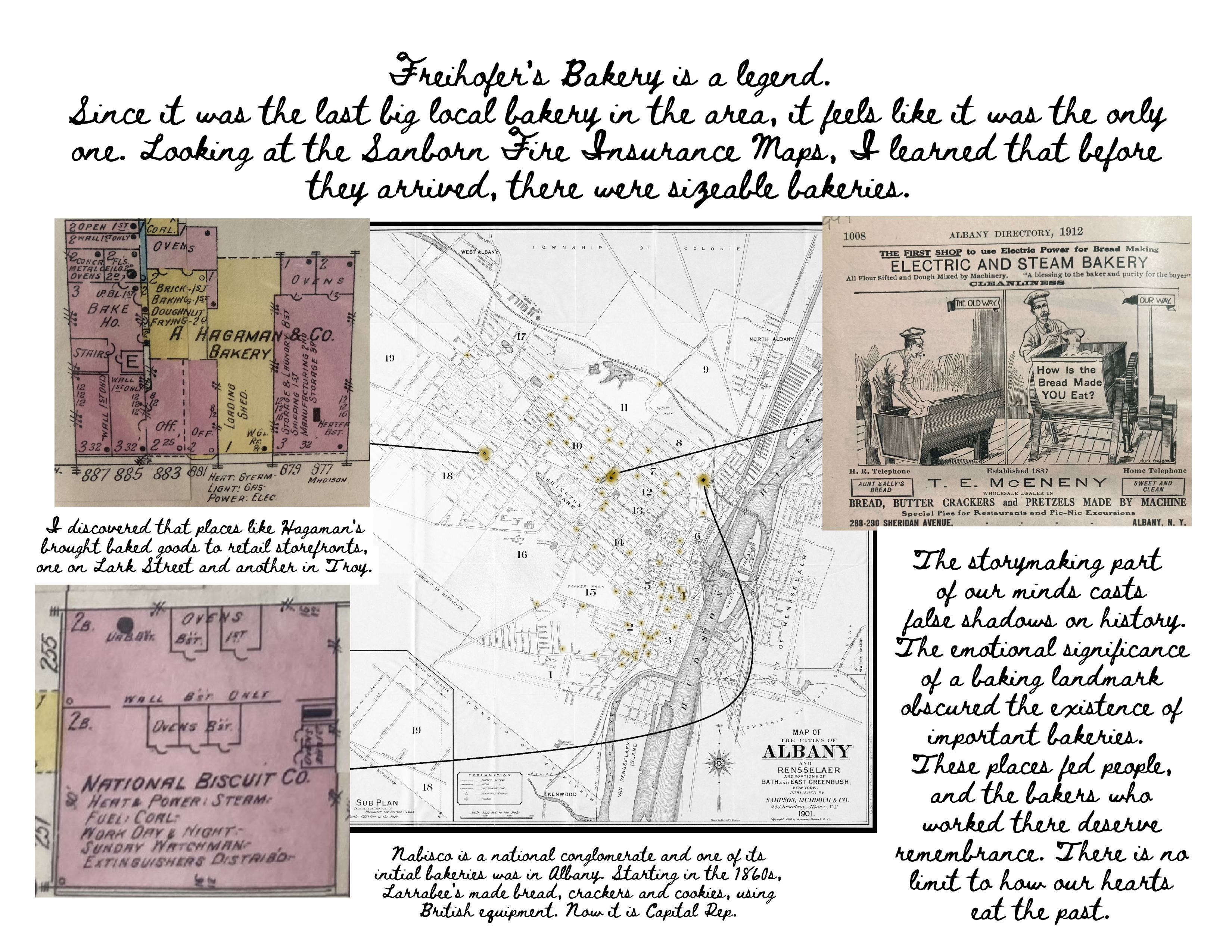
Planning for the Compass Roses exhibit at Opalka Gallery, I went to the Albany County Hall of Records to study their city directories and Sanborn Fire Insurance maps. I looked at 1911 & 1912, again studying the lay of the bakery land. I went on a deep detour with Nabisco history. A local precursor to the biggified enterprise, Larrabee’s, burnt in 1887, putting 300 bakers out of work!
The Aerated Bread Company made loaves with carbonic acid, eliminating dangerous fermentation! Hagaman’s made baked goods for Albany, and for Troy! There are oh so many bread bunnyholes to explore.
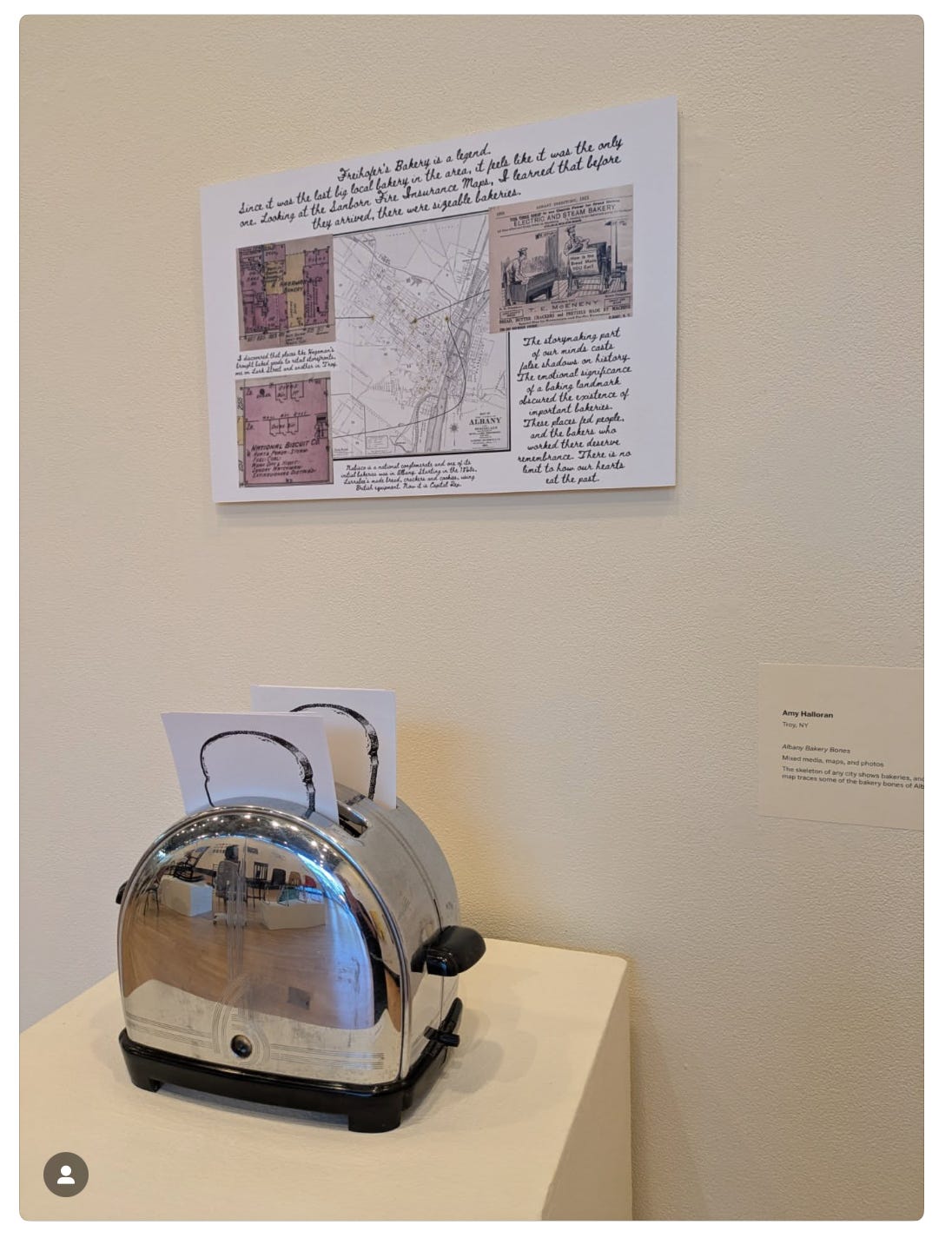
I narrowed down my amazement to make a map of Albany’s bakery bones that is now on display and will be through October 11th. My husband made a participatory olfactory map, and illustrator Liz Zunon embroidered her map of Albany on a burlap cacoa bag.
Even more than the fun of finding these places and getting a sense of them in my head, is planting the idea of bread maps in other people’s heads. I made a postcard with an iconic piece of bread, popped them in a toaster2 and hoped people would take them to muse about the place of bread in their lives.
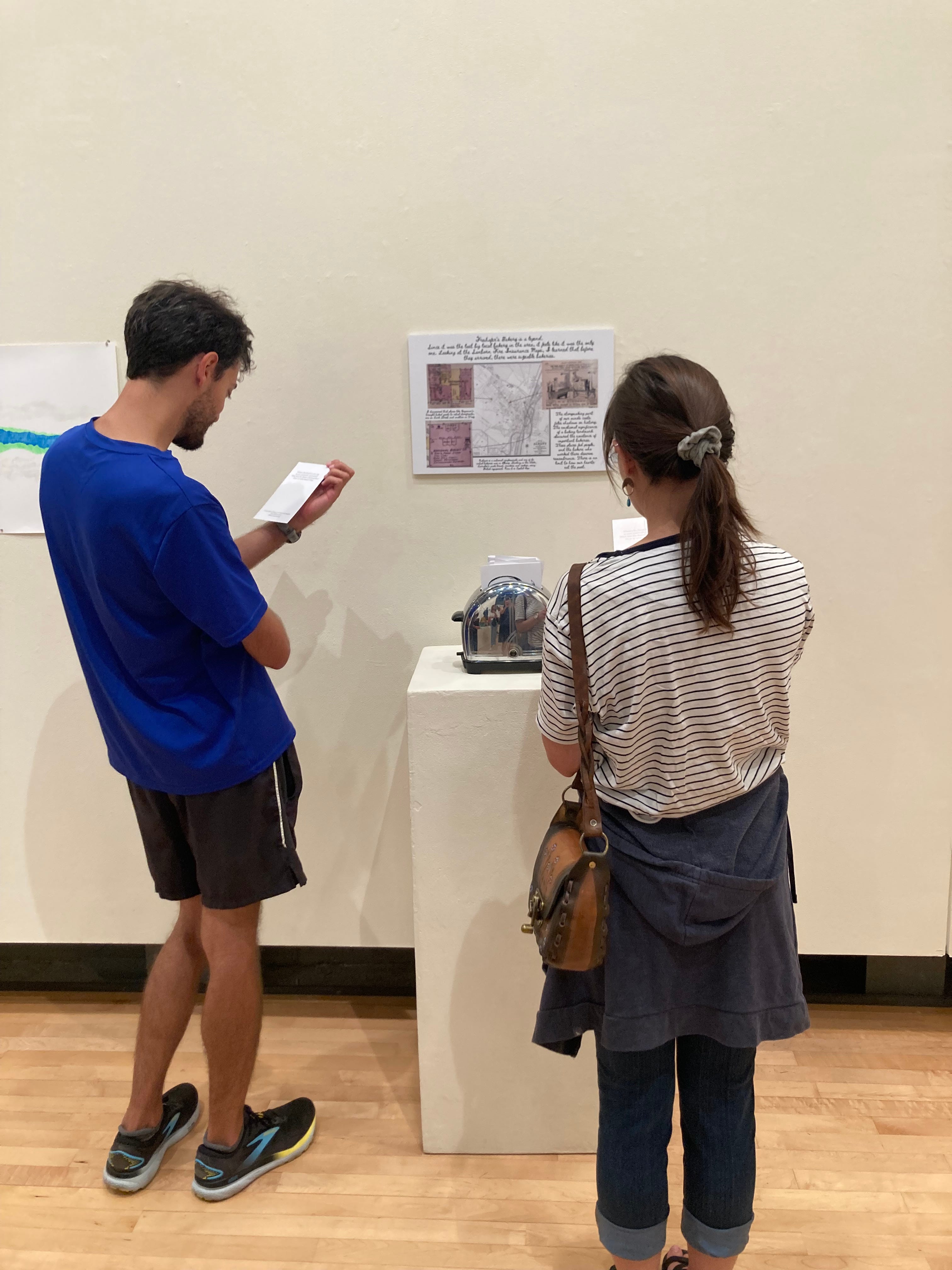
I am always game to get people writing. This is just trick #7516 or so in my book. But it is working! People are taking the cards and I keep replenishing them. '
If you are near Albany, I hope you’ll go to the exhibit. If you know of other Compass Roses projects, do tell! I’m such a fan of this community exploration of place.


Yours, Amy
MY FALL BREADCRUMBS:
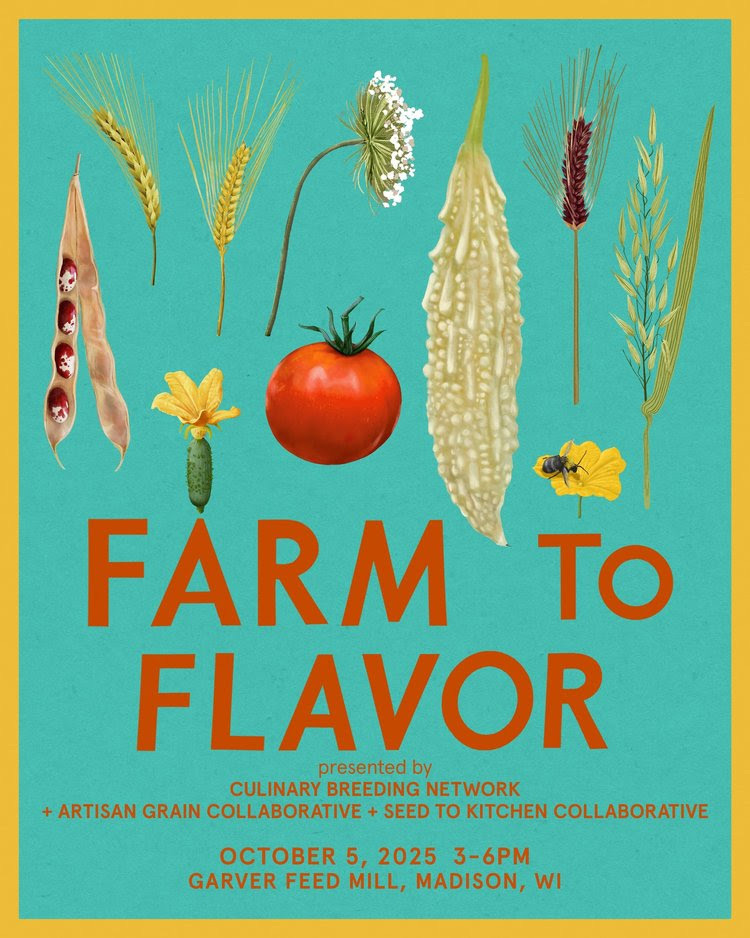
If you are in Madison, I hope you’ll join me at Farm to Flavor on Sunday, October 5th. This is an opportunity to meet food in a whole other way — through the researchers and farmers who are working with bakers, chefs and drink makers to get new tastes from the ground. Come!
If you are in Michigan, join me at Zingerman’s November 12th, where I’ll be talking about the Evolution of American Baking, zooming out and in on the histories of farming, milling and bakeries to see how we got to factory bread, and what corner bakeshops looked like at the turn of the 20th century.
I can’t stop thinking about this pamphlet or conference. You can read what I wrote about it on Wordloaf; the booklet itself; or the report of the conference for a fascinating window on the business of bread.
This beaut of a toaster is on generous loan from Diane and Rob, ephemerists extraordinaire at A Gatherin!
I love the designation of Troy as the City of Women. My grandmother, Ella Cooney, and her four sisters all worked at the collar factory from quite a young age. . Ella left school at the level of sixth grade to work in the collar factory as their father met his demise at his workplace, a local quarry.
Freihofer’s made the right choice if you go by their wares being ever present in my grandmother’s house!
The exhibit sounds swell.
I love the idea of this exhibition and, as always, anything involving the history of women in the workforce. And the toaster display is so great. Madison is my alma mater, maybe I can bribe someone to give me a ride up there for the day!