
Czechbox Bakery
Old vs. New

Dear Bakers,
I’ve been hearing wonderful things about Gretchen’s writing, but the end of the series is here!
Coincidentally, I’m reading Obscure Destinies, a collection of three short novels by Willa Cather. A year and a half ago, I stumbled across Lucy Gayheart and fell hard. The language, the reflections of a rural raised woman moving to the city and following her dreams, the trips on the train, the descriptions of ice skating — I loved it all.

Cather grew up in Nebraska, and lived from 1873-1947, a period that really compels me. She was a journalist long before she wrote fiction, and I adore the details that background her storytelling.
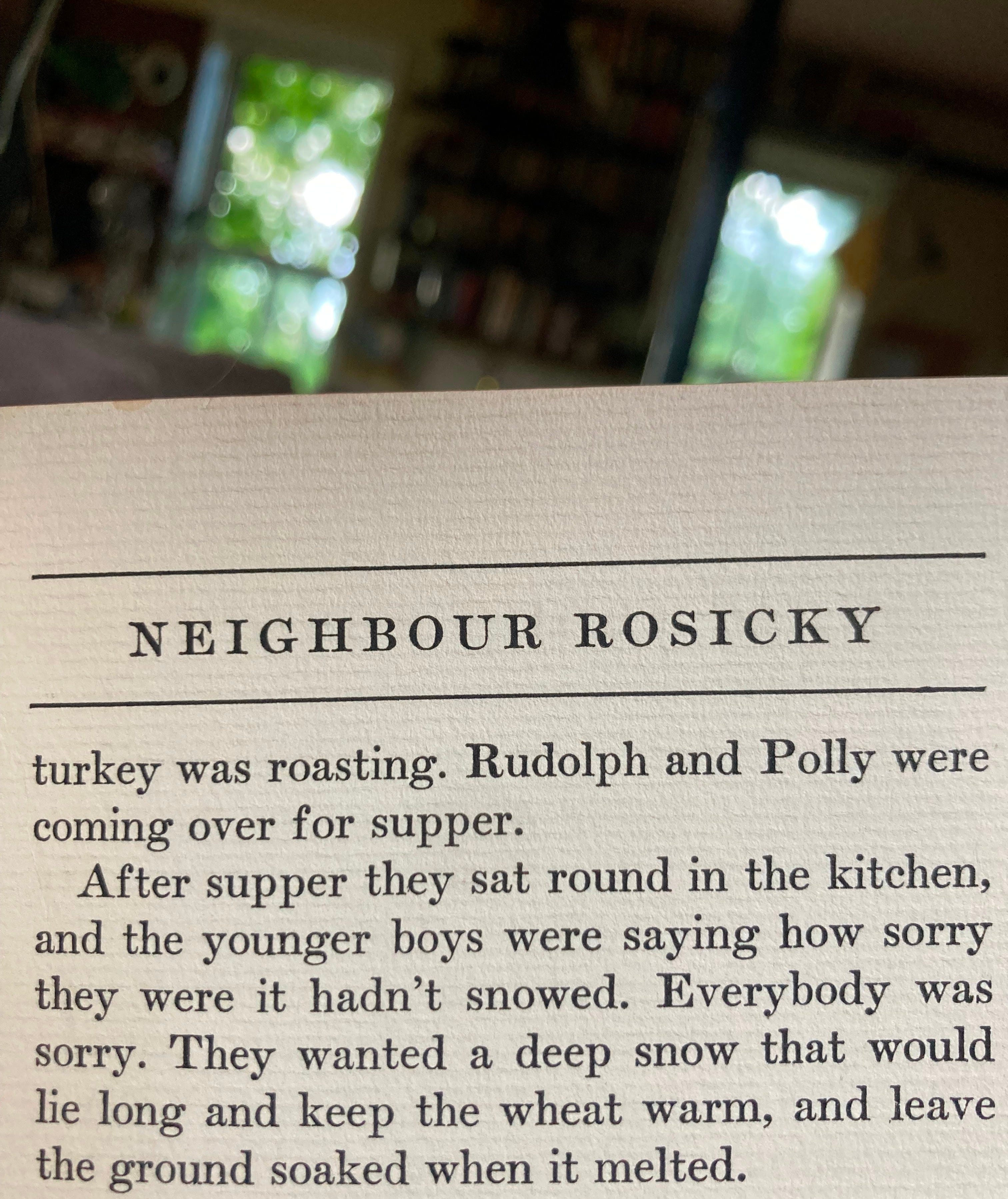
I didn’t expect to run into Czech baked goods in Obscure Destinies, so finding them is a delight. The first of the three parts of this book, Neighbour Rosicky is about a Czech farmer, Rosicky. Worries about the wheat crop are a deep part of the characters’ realities, as you can see in this passage.
Home baking underlines the story, too. Rosicky comes back from town and smells “hot coffee-cake of some kind.” He eats lunch — he never eats elsewhere! That would be extravagant, even if he did like other people’s food.
I love this window on a seasoned baker:
“After he was settled in his chair, stirring his coffee in a big cup, Mary took out of the oven a pan of kolache stuffed with apricots, examined them anxiously to see whether they had got too dry, put them beside his plate, and then sat down opposite him.” The couple discusses his doctor’s appointment, and the kolache is not mentioned again.
A poppy seed braid plays a stronger role in a scene in Old Mrs. Harris. Mrs. Rosen brings the treat to her neighbor’s house, a ruse for a surreptitious visit. I would like to read the rest of the book today and report on all the other appearances of Czech baking! But I would also like to get this missive to you.
Stay tuned for the Cake Report, and please join me in thanking Gretchen for sharing her passion and experiences!
Yours, Amy
Gretchen Kuehnlein-Kopmanis is a director of financial support programs at the University of Michigan. To keep her family’s heritage recipes alive, she started a cottage food business in 2012 called Czechbox Bakery, specializing in Eastern European and Baltic baked goods. “Being a European bakery means my ingredient palette is different from an American bakery. Eastern Europeans use poppy seed, not peanut butter; English walnuts, not Southern pecans; apricots, not peaches. Being a heritage bakery means I only use ingredients that were available in the 1850s.”
Being a ‘heritage’ baker does not mean I avoid modern appliances. On the contrary! I could not — well, rather I would not do this if I had to do everything manually. Years ago, I was gifted a KitchenAid mixer, but rarely used it (if you recall my previous comments about yeast being my nemesis) and I could get by quite well with a simple hand mixer for box cakes and pancakes. When I took Zingerman’s class on how to make strudel dough, which we made entirely by hand, I realized I had an opportunity to put that mixer to work. I wasn’t sure it would work. Zingerman’s made it sound mystical to make that dough, that it almost defied any mechanical intervention. Their exact instructions were:
Now comes the fun! In order to develop the gluten in the dough the dough must be forcefully kneaded. In one continuous motion, pick up the dough with your hand, lift, and turn your hand over so that your wrist is facing up, then slap the dough down hard. This is called “The Beaver Slap”! Fold the dough back on itself, and detach it from the surface with a plastic bench scrape. Repeat this 100 times.
It made me wish I could have seen my great-grandma make that strudel because I’m sure she used that 2x4 spoon of hers. That particular class was a real work-out! I wondered if a stand mixer could achieve the ‘beaver slap’ technique. The answer was yes, and no. It could do it, but only at a very high speed, which is not recommended by the manufacturer, and in order to get ‘100 slaps’ I had to run the mixer on high for five minutes. Needless to say, it got very warm, and yes, over the 14 years I’ve run my bakery, I’ve had to upgrade from consumer to professional versions of the mixer, but 2000+ strudels later, I can tell you definitively that there’s no magic to the beaver slap. Gluten is gluten is gluten. Build it however you can.
When I eventually overcame my yeast anxiety, I happily informed my grandma that I was going to try making kolačký in the KitchenAid, sans ‘spoon’; she didn’t even bat an eye before saying “it won’t taste right.” So yes, there was some resistance. Sure, she’d made kolačký her whole life. She was in her eighties and still kneaded dough like it was nothing. Why on earth would I need some fancy, expensive machine? Well, because my limp-noodle arms simply weren’t up for the job.
I earned my first chronic bakery injury by trying a little too hard to stick to the old ways. I was using Grandma’s poppy-seed grinder — which, incidentally, only holds about a quarter cup at a time — and the handle didn’t spin quite right. So there I was, gripping it loosely, grinding batch after tiny batch, until I’d managed to beat up my poor thumb enough to start developing trigger finger.
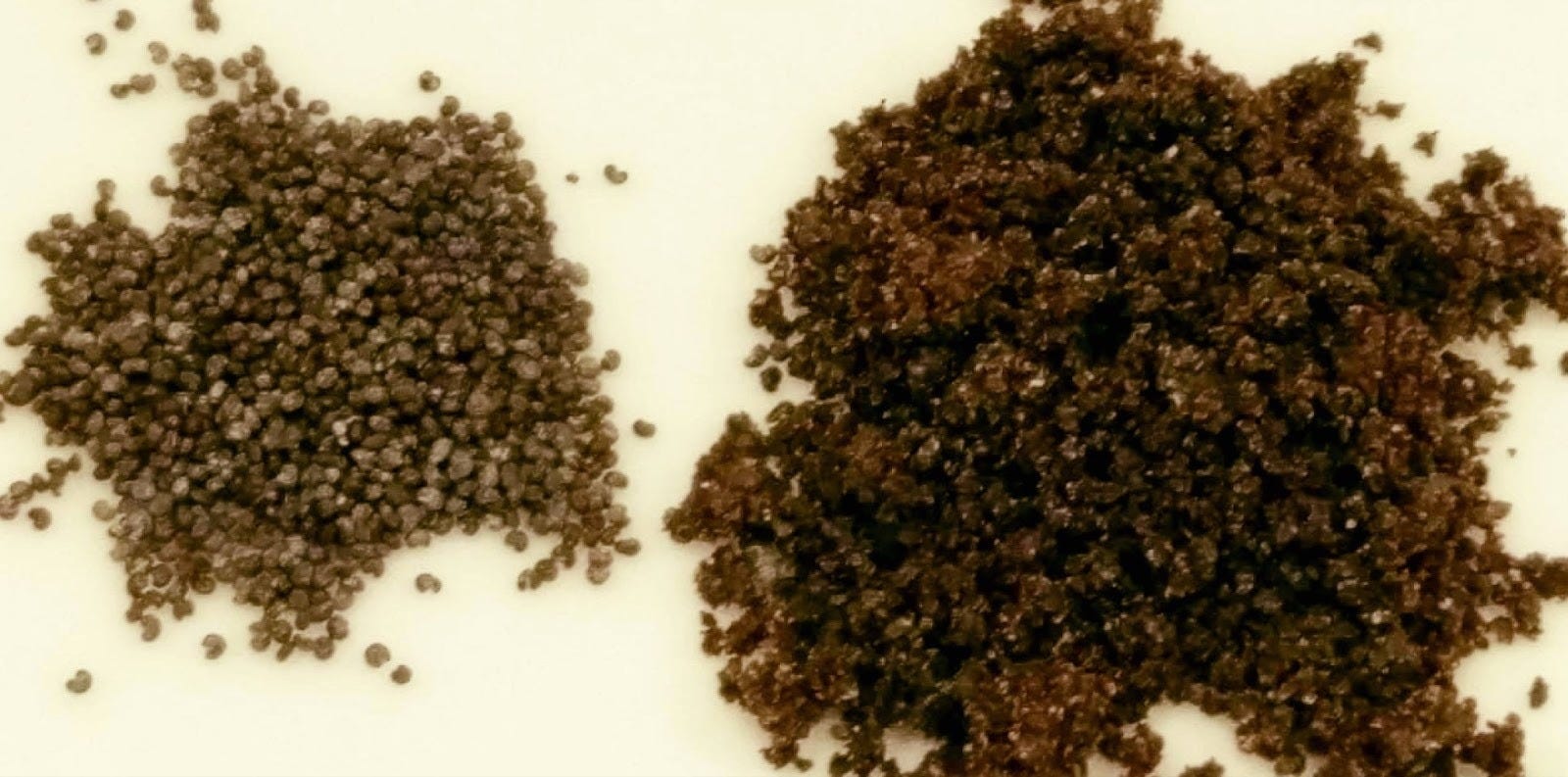
See, most American bakers don’t seem to understand that poppy seed has to be ground to release the oil and flavor of the poppy. Just adding it to lemon muffins means you’re only picking tiny black seeds from your teeth and not getting the full flavor. When you grind poppy seed it becomes a kind of paste, like when you grind peanuts to make peanut butter. Manually grinding poppy seed is a time intensive proposition, and making enough ground poppy to support a business, not just a special Easter treat, requires pounds of poppy seed, not a cup or two. I needed to find something that was not quite commercial grade (those cost thousands), but something else. And affordable.
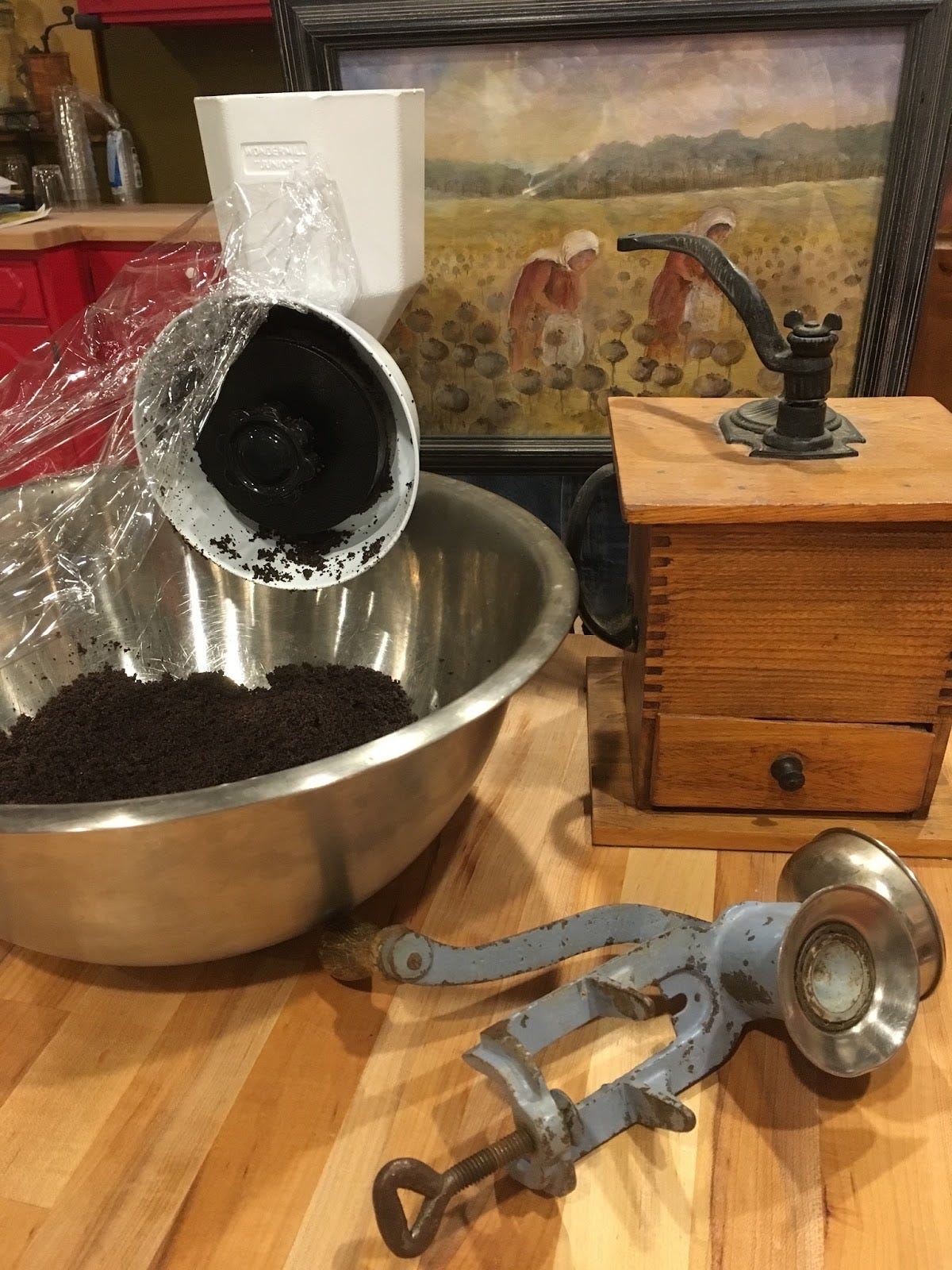
My great grandmother’s poppy seed grinder reminded me of old fashioned coffee grinders from the 1800’s, while my grandmother’s poppy seed grinder reminded me of the meat grinder my mom used. I searched for a more modern poppy seed grinder and found it in the Wondermill Junior. It held two cups of poppy seed and it had an attachment that allowed us to connect a drill! However, even with this mechanical attachment, it was still a time drop and required two people. It was a strenuous proposition holding that drill for 20 minutes at a time, just to get enough poppy seed to make 8 poppy rolls. My husband ended up with a bad shoulder strain, so that wasn’t going to be the option, either.
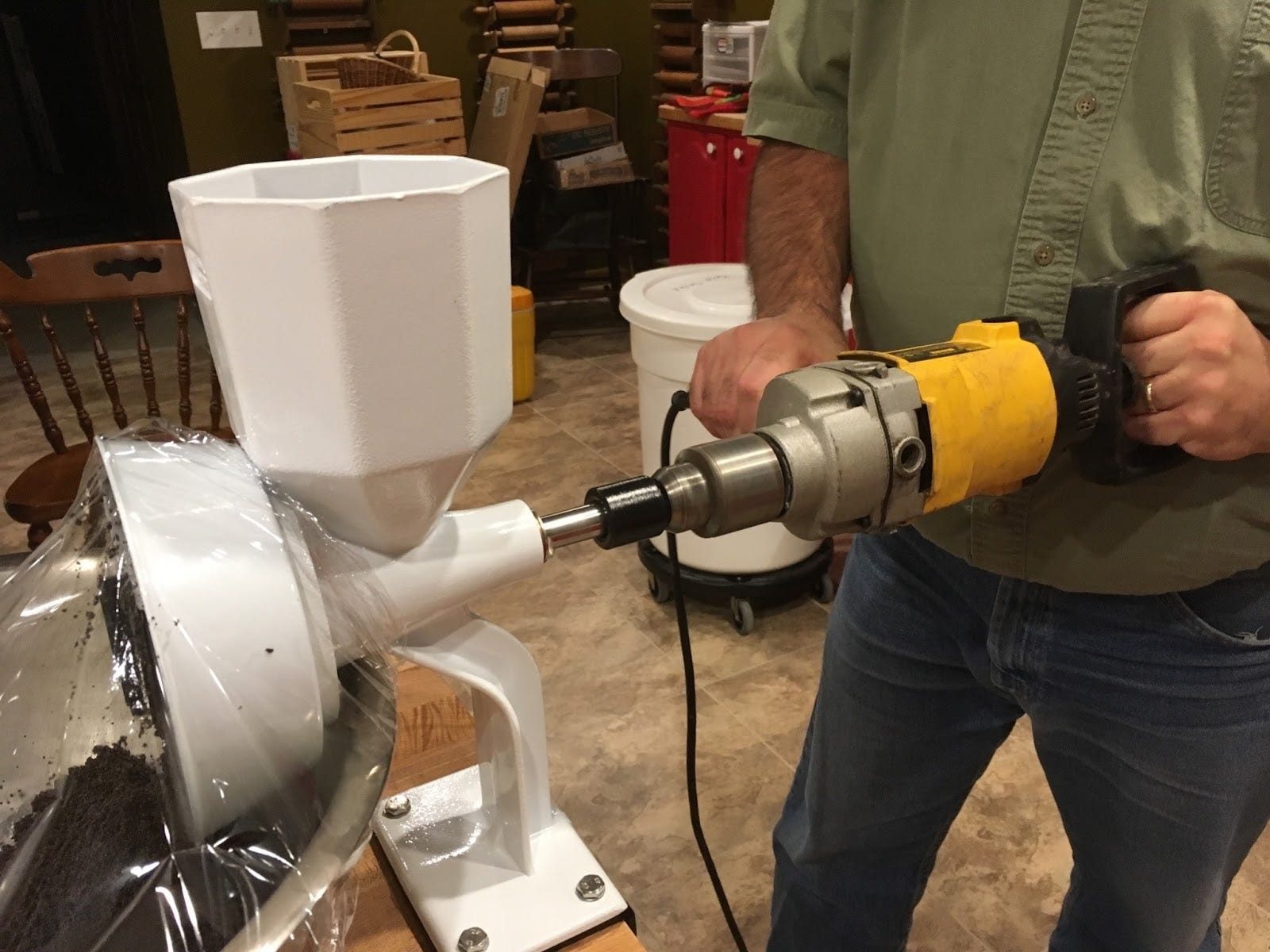
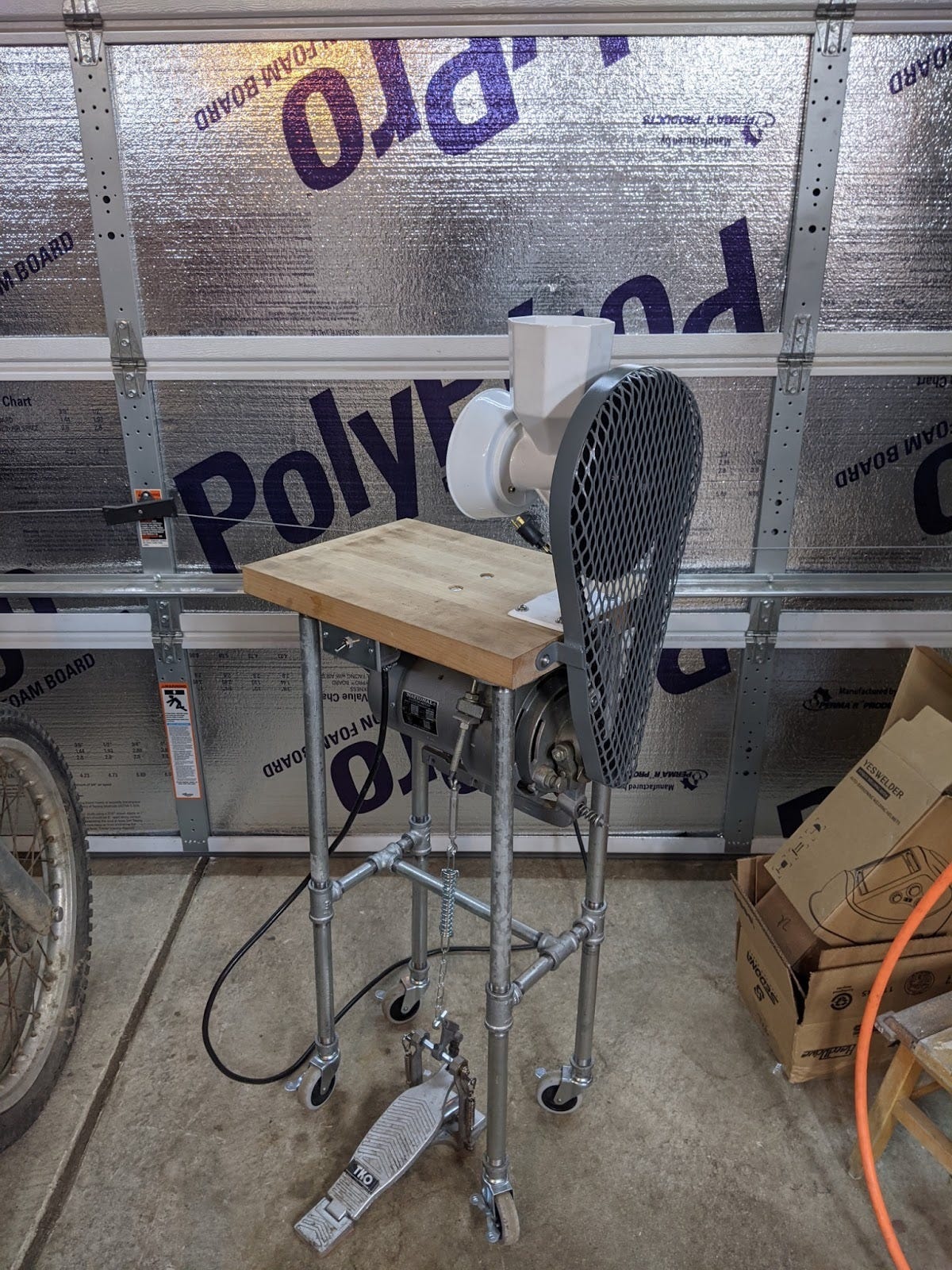
I still needed to up my game. Now that I had a device, I was able to search the internet for solutions of how other people had automated the grinding process. Once I found a possible solution, I reached out to a friend of ours who does custom manufacturing. Using an old sewing machine motor, he built this fully automated addition for the mill and now I can grind 25 pounds at a time in less than 90 minutes!
I still think about my grandma’s knee-jerk reaction when I told her I was going to use a KitchenAid to knead dough. I loved her, but she was flat-out wrong. You can use modern machines, and your dough will still taste every bit as righteous as the old-school version. Tradition isn’t ruined by a little electricity.
What actually matters is the mission. Mine is keeping our heritage baked goods alive, keeping them on tables, in hands, in hearts. And guess what? The method isn’t the sacred thing. The food is. You don’t earn authenticity by sacrificing your joints.
Use the tool that keeps you going.
Protect your body.
Running a bakery is already a battle; you don’t need to bleed for the dough to be real.
“You don’t need to bleed for the dough to be real” I love it that she proved that gluten is gluten!
Big factories churn out less than homemade taste and quality. But she can make good homemade bread with “electricity”. I love this article.
Oh yes, there's a number of Czech settlements in Nebraska, I think mostly in the eastern part of the state. There even used to be a well-known Czech restaurant in Omaha.
As for using modern appliances in the making of heritage recipes, I say why not? Our grandmothers/great-grandmothers would have done the same if they'd had access to them. I'm sure they would have embraced food processors, stand mixers and the like.